
Make Small Bets (Or How to Test Small Before You Bet the Farm)
Real entrepreneurship starts with low-fidelity bets. Here's how Canvas On Demand, a subscription vitamin trap, and half a mall kiosk taught me to let the market decide.

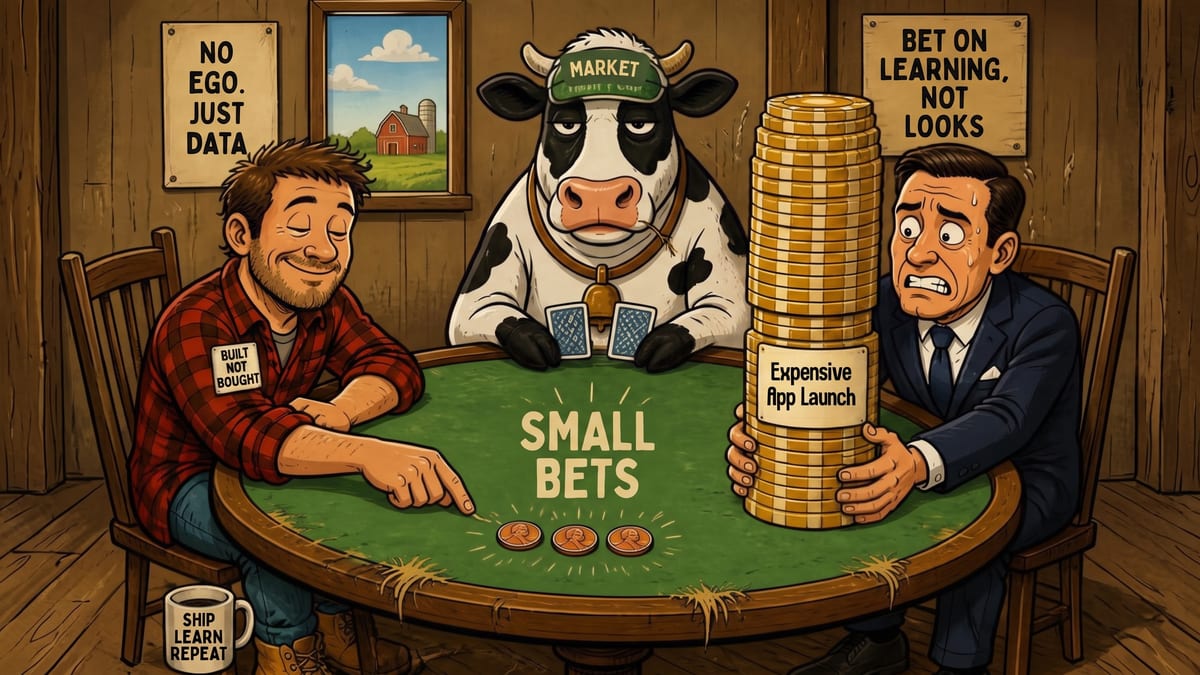
When Tom and I were starting out, I learned pretty quickly to forget the glamour of slick pitch decks, expensive logos, or raising big VC money out of the gate. Real entrepreneurship — what we call trench-level EntreManureship — starts with making small, low-fidelity bets to see if an idea has real legs before you risk your life savings or your sanity.
To me, starting a business isn't about looking like a success on LinkedIn or wearing a fancy title. It's about getting into the mess, testing actual demand, and letting real market feedback dictate your next move.
Too many aspiring founders fall into the trap of over-building in isolation. They spend months perfecting branding or writing a 50-page novel called a business plan before selling a single unit.
My rule flips that on its head: Bet the cow before you bet the farm.
The Three Rules of the Small Bet
Test Demand Early. Validate your market on the side or after hours before making a massive financial or career leap.
Get Real Money First. Compliments from your mom or polite encouragement from friends don't pay the bills. Paying customers are the only true validation.
Let the Idea Choose YOU. Unemotional market feedback should guide your product, pricing, and pivots — not your personal ego or blind passion.
Real Bets from the Trenches: The Winner, the Trap, and the Fast Failure
Theory is fine, but my biggest lessons came from getting my hands dirty in the real world. Here's how small bets played out in my own career.
1. Canvas On Demand (The Winner)
When we acquired a struggling photo-restoration business, our premise was to pivot toward turning people's favorite family photos into custom canvas art. Instead of buying a massive factory, our test was dead simple: we built a basic, low-cost website to see if anyone cared.
The initial sales gave us a distinct "sign of life." That tiny bet validated the entire concept and ultimately grew into a multi-million dollar company that we built, scaled, and exited.
2. Today's Essentials (The Subscription Trap)
We had an idea to build an in-house line of high-quality whole-food supplements for long-term subscribers. To test it, we partnered up, sourced top-tier manufacturers, and marketed the line to an existing customer base.
The result? Fantastic product, terrible business model. Acquiring new subscribers cost-effectively turned out to be an uphill battle we couldn't win. Because we tested it with a limited rollout instead of scaling up massive production lines, we saved ourselves from catastrophic losses.
3. Music On Demand (The Fast Failure)
The pitch: sell personalized children's music CDs, custom-burned right on the spot at the mall. To test it, I dedicated half of an existing mall kiosk to the setup.
The market feedback was immediate, brutal, and ruthless: buyer interest was low, margins were thin, and my daily food-court cookie expenses literally exceeded our revenue. But because I kept the test confined to half a kiosk, it ended up being a cheap, fast failure rather than a fatal disaster.
How to Run Your Own Low-Fidelity Test
State Your Premise. Clearly define what problem you're solving, who feels that pain, and who will pull out a credit card to fix it.
Build a Minimum Viable Offer. Put together a simple landing page, run a tiny pilot, or set up a low-cost experiment (like my half-kiosk) that requires minimal upfront cash.
Put It in Front of Real Prospects. Pitch actual buyers, collect unfiltered feedback, watch real conversion rates, and tweak based on dollar-driven behavior.
The EntreManure bottom line: embrace the dirty work of low-stakes experimentation. Not every bet you make will be a Canvas On Demand, and you're going to have your share of food-court cookie fast failures. By keeping your bets small and frequent, you minimize your downside while maximizing your speed to the ideas that actually generate profit.
Explore Topics
Written by
Josef Schmidt
Content creator and writer sharing insights and stories.